

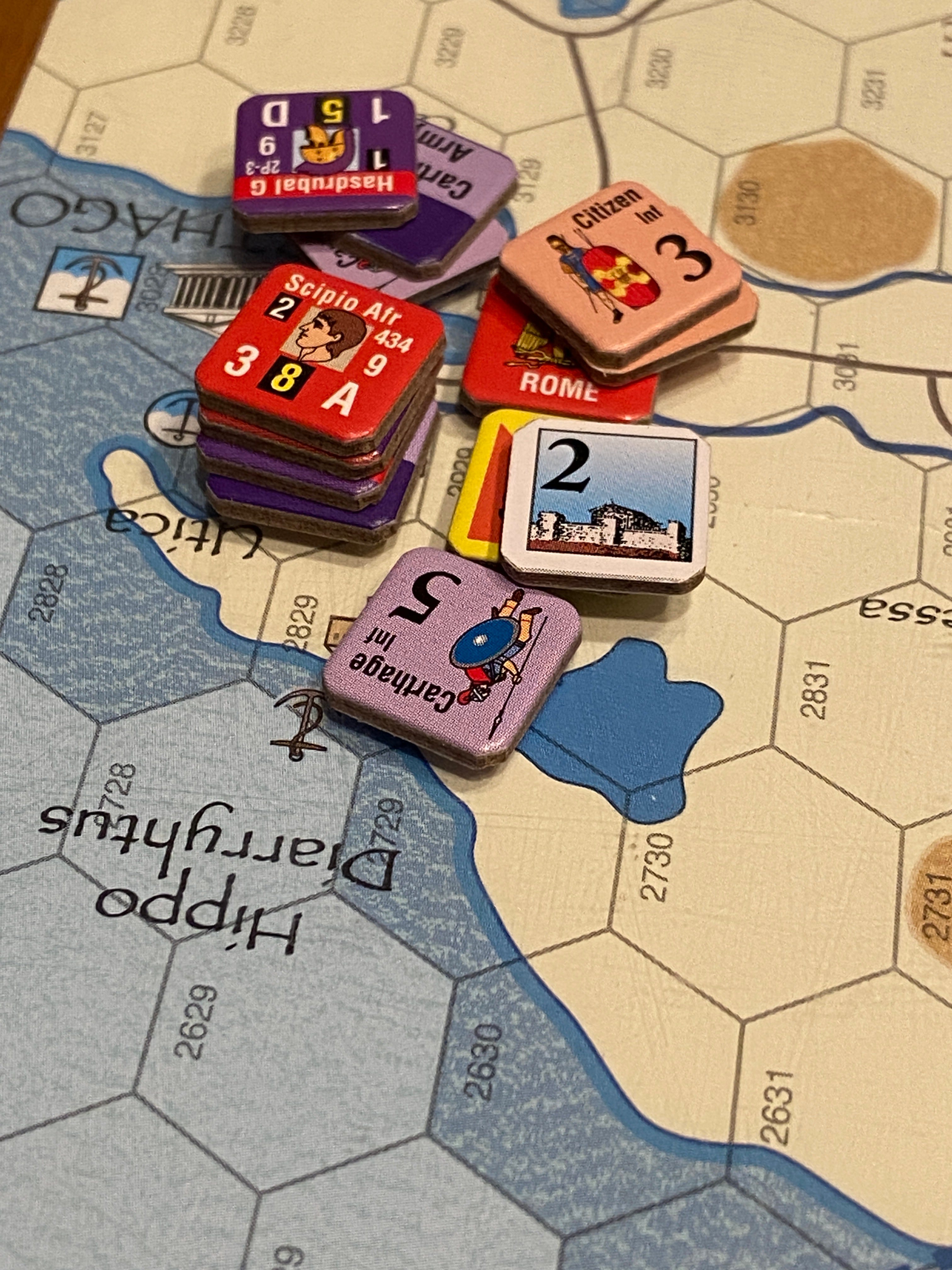
I said I was going to give Thunderbolt one more chance to win me over, so we played the scenario for Scipio’s invasion of Africa that historically resulted in Hannibal’s final defeat at Zama and the end of the war.
I don’t know what to say about this scenario other than it was strange and bad. Scipio shows up with a decent-sized veteran consular army. The rules of the scenario dictate his plan: take Utica then besiege Carthage. He has no other options. Historically Scipio used Utica as his base and the scenario forces you to do the same thing. The Carthaginians therefore have to fight one field battle to try to break the siege. The whole scenario is decided by that one battle, one throw of a ten-sider. Hannibal might show up after the main events of the scenario have occurred … or he might not! He was a no-show in ours; what scenario design purpose it serves to have one of the headliners be potentially absent, I’m not sure. I just don’t think all this is a particularly interesting way to spend a few hours of your life.
One thing I’ve come to feel about this system is that the detail is misplaced. The battle system is this very interesting and ornate thing with lots of period chrome but a hugely random outcome. I actually like it, it’s very evocative even if the players don’t have that much agency. The thing is, though, that field battles are rather rare. In Hannibal’s whole decade-long sojourn in Italy only a handful of significant battles were fought. The real action is in sieges. In the game, defending armies generally only fight in the field when they are defending a city they can’t afford to lose and they think they can’t survive a siege. It’s almost impossible to actually bring an enemy army to battle if they think they can safely hide behind city walls. So you end up doing a ton of sieges, and the siege system feels underdeveloped to me. Reducing a city’s walls involves a truly inordinate number of individual die rolls with minimal stakes, then the assault table is two high-stakes, nearly or exactly 50-50 rolls that are almost insensitive to player inputs. It’s not an interesting system, and it also consumes a lot of time. Given the centrality of sieges to literally every campaign in the game, this is hard to stomach.
I started out with this game acknowledging that it was old, rules-heavy, and heavy with Richard Berg’s idiosyncratic design style, but also with some optimism that I’d find something engaging in a system I’d always found appealing in principle but had never been able to fully stress-test. I can now say with more confidence that this is from a different era of game design. Like another game system I used to enjoy but can’t play anymore, The Gamers’ Operational Combat Series, I don’t think its interesting big ideas translate into interesting actual gameplay. It wastes too much of your time, its detail budget is mis-allocated, it tries to do too much, and when it centers an undercooked system (sieges in The Ancient World, the air game in OCS) it’s too messy.
And yet, I can’t quite bring myself to totally give up on it. These campaigns are set in fascinating times of monumental change in the ancient world. The best (and more or less only) game we have is Mark Simonitch’s Hannibal: Rome vs Carthage and while there is no denying that game’s greatness, it too is showing some age at this point plus it only covers the one conflict and omits quite a lot. There is plenty of room for more games set in this period. For all that The Ancient World doesn’t really work, there also isn’t yet a good alternative for exploring this history.
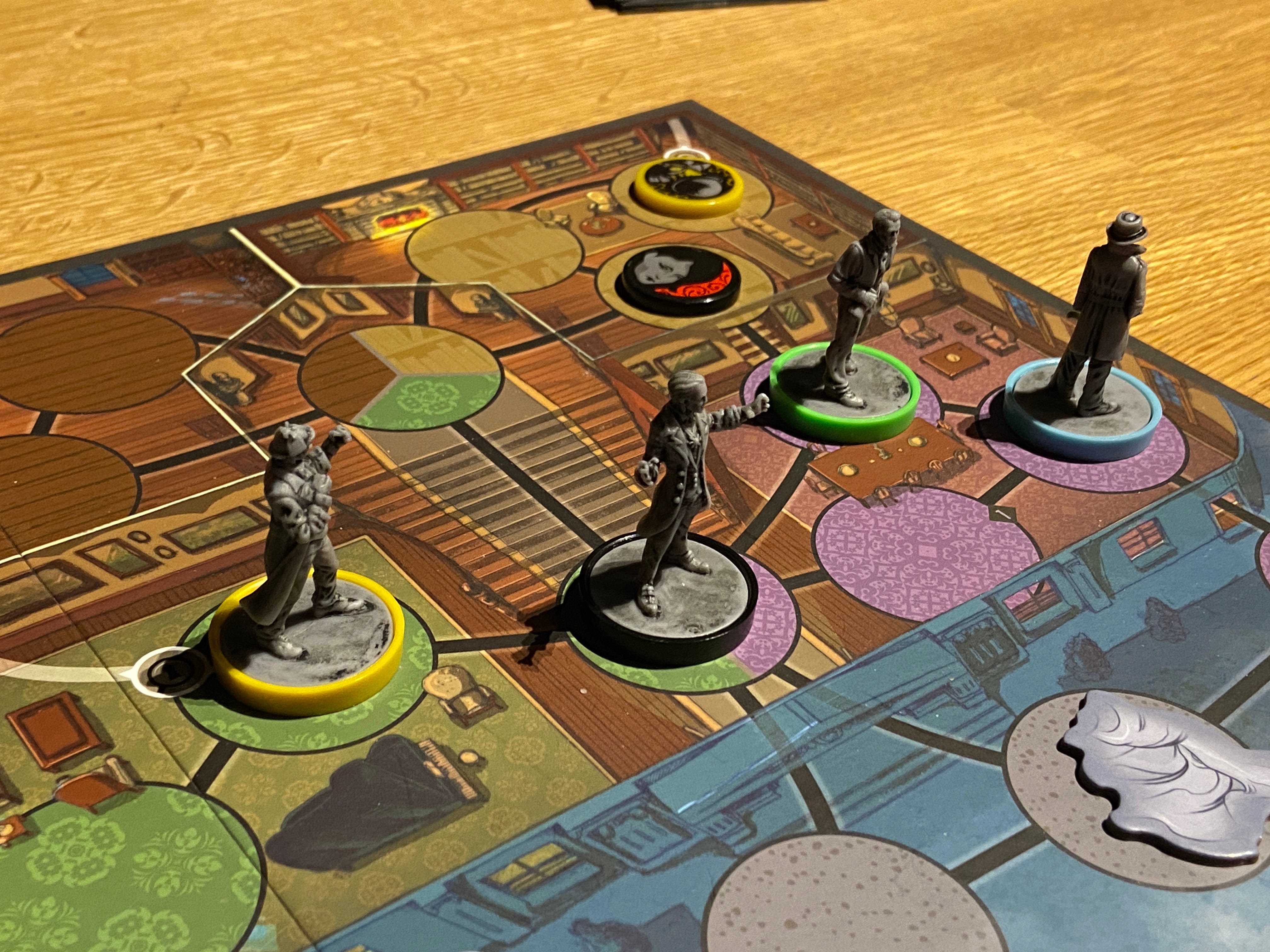
Unmatched is always a game that I think I should like more than I actually do. Star Wars: Epic Duels (its precursor game) was pretty fun back in the day, in an occasional, lighthearted kind of way. Unmatched has never done anything for me.
Part of this is systemic problems. For one, the multiplayer dimension of the game has never worked. The “last person standing” mode is obviously dumb for all the usual reasons that it hasn’t even tried to deal with; I see no point in playing that and am mildly insulted the rules suggest it. You can do teams which is at least workable but it’s the usual thing, teams concentrate their fire on one target until they take them down and then that player gets to sit around and wait for the next game. It’s also no fun to be the designated target. If you look at games that do this team play dynamic well, like WWII Mini (Total Domination) or Quartermaster General, they channelize players so they aren’t free to just pick on and clobber one opponent because that is boring. Unmatched (and Epic Duels) offers no restraints and little or no way for you to shield your partner. Then there are also obvious balance problems in the decks, with some heroes a lot better than others. In our game Sherlock Holmes could almost — almost — battle two other characters to a draw, while Dr Jekyll got almost immediately run over and his player sat out for 20 minutes.
That’s all obviously bad. However I think the main thing is this: Epic Duels/Unmatched is a slight game. It’s not bad exactly, but it is slight. But when it was powered by the cinematic duels of Luke Skywalker vs Darth Vader or Anakin Skywalker vs Count Dooku of Obiwan vs Darth Maul, that’s something I can get behind. Those are epic. They come with stakes baked in that are legible to anyone who knows Star Wars. King Arthur vs Medusa? Beowulf vs Sinbad? Whatever other public domain randos they could come up with? I just don’t really care. There’s no context, no substance, no theme, no stakes.
Unmatched seems to have been quite popular, so maybe I’m missing something? Feel free to point it out to me in the comments. Until then, this is one I’ll pass on.
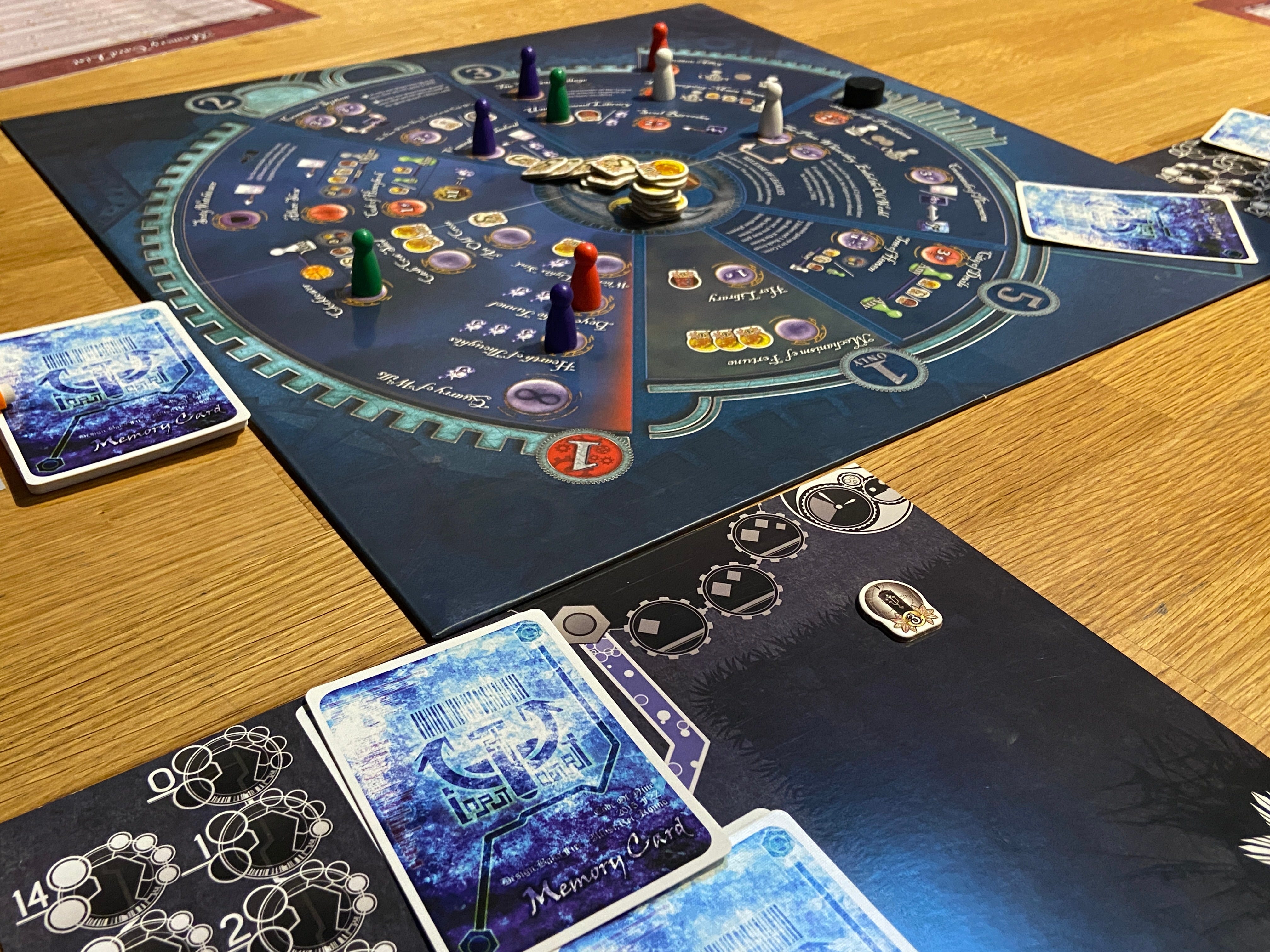
Code of Nine has been in my bag for the Guildhouse a number of times but I’ve never ended up playing it. Since we played a number of shorter games this week I decided to push to get it to the table.
I never know how much explanation to offer for these games that have been bouncing around for a while (this is from 2012) but are not well-known. So here it is: the theme is memory. The game is driven by a deck of 30 or so scoring cards. Everyone gets two to start the game and puts one in their “shoals” (relatively easy for others to get access to) and one in their “abyss” (possible to access, but quite difficult). You then play a 5-turn, pretty standard worker placement game where we go around collecting, losing, and maybe stealing gold, statues, books, and some unique artifacts, as well as doing actions like looking at other player’ scoring cards. At the end of the game we reveal all the scoring cards and score. Many are straightforward (some piece is worth positive points, or negative points) but many are wilder; the person with the least gold can’t win, or if you have exactly two books you lose 10 points. There is some nice thematic color on top of this, but that’s the game’s core activity. 5-10 minutes to teach, 45 to play.
It’s a niche game, but it’s one that does what it’s doing extremely well. You only get 15 plays for the whole game (or 12 if, as happens occasionally, the last turn gets dropped!), so there just isn’t time to screw around. You tend to be thinking less about bluffing and misdirection and more about how to do what you need to do without being too obvious, so every move has meaning. You can suss out a lot without ever being sure of everything. You narrow the possibilities, but the final scoring is always a revelation, and so exciting.
I played the Expert version of the game this time, which I had never done before. The standard game is great and not obviously in need of more, but I had always wanted to try it. It’s definitely wilder; I don’t know if it’s better. You have more high-stakes scoring rules, more action space options that are more pointed, and an extra victory condition that can be swapped in late to add even more scoring uncertainty. I liked it; I think the possibility of more, sharper scoring rules adds excitement to the game. Having a few more worker spots is good. The standard game, with more bounded and structured scoring cards, is certainly more tractable though.


We had one of our younger friends by who had never played Modern Art, so the conclusion was that we obviously had to play Modern Art. Is Modern Art perfect? No. The double-auction rules are a bit finicky and you have to use the right ones (i.e., not the incorrect ones from the Mayfair edition which was the only one you could get in the US for many years; the current CMON rules are correct). This is why Quest for El Dorado is so great, because there is basically zero rules friction right from the start. Modern Art isn’t that. But Modern Art is nearly perfect. Fast, high tension, with stakes that ratchet up mercilessly. Accessible to almost anyone, new players can easily be competitive, and yet meaty enough for hobbyists. We don’t play it as much as we used to for the twin reasons that we’ve already played it a ton, and that it’s 2026 and we are literally swamped with new hobbyist games of fair to middling quality but that are, as I say, new. Still, it’s easy to forget how crazy-good some of these classics from the 90s are. After playing Modern Art again for the first time in quite a while, the obvious question was: wait, why am I not playing this more often?
We ended up playing ML’EM as our lighter closer. This came out a couple years ago and while it didn’t scream instant classic I had some hopes for it in the Knizian “lightish but more depth than it seems” category. And while we enjoyed it, it never truly clicked for me and it languished on the shelf. It’s always interesting for me to play a game with an all-new group of players, because it can help me look at it with a new perspective. I’m not going to claim that the scales fell from my eyes here and I perceived unexpected depths that leave me rushing to play it again. It’s still fine. But I did see more: how the competition for objectives influences astronaut selection, and how you can use the saboteur astronaut less arbitrarily. It’s not Modern Art, but there is a bit more here than I gave it credit for. It’s definitely more than a simple push-your-luck game like Can’t Stop.
Coda
My bass clarinet quartet will be performing Friday, so here is the original bass clarinet quartet (Edmund Welles) performing the first piece for bass clarinets I ever worked on, Passive Illumination:
The piece was written by their bandleader Cornelius Boots (far left), who is a virtuosic performer, wrote or arranged almost all of their early repertoire, and is also something of a character. He gave up bass clarinet about a decade ago in favor of the shakuhachi, but I ran into him briefly at Low Clarinet Fest 2025 where he had premiered a couple new compositions (but not performed) so maybe he’s back in the game at least a bit. Anyway, I like Passive Illumination and back when I had a quartet that met regularly I’d usually try to program it as an opener because essentially nobody has ever heard a bass clarinet quartet. The piece sets up the different timbres of the different registers and sets the table for what the ensemble sounds like. It’s also a good piece!
That’s all for this week — as always, thanks for reading. See you next week!
When it comes to strategic / Ancient systems=m: This is highly rated: https://boardgamegeek.com/boardgamefamily/3259/series-ancient-wars-strategy-and-tactics